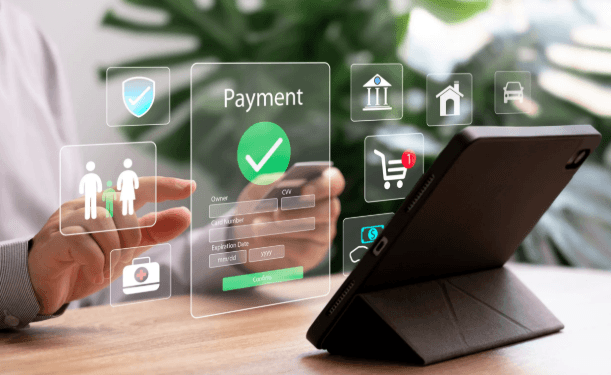
The Future of Digital Payments

The future of digital payments will weave seamlessly into daily life, delivering near-instant, frictionless exchanges. Wallets emit only ephemeral data while biometric checks speed trusted purchases. Distributed ledgers and tokenized assets enable programmable value with robust security. Ambient sensing and interoperable platforms broaden cross-system payments, all under privacy-by-design governance. Inclusive ecosystems and bold experiments will redefine access and value flow, leaving a trail of questions that compel further exploration and assurance.
How Digital Payments Are Shaping Everyday Life
Digital payments have quietly become the default flow of daily life, turning wallets into ephemeral data trails and purchases into instant, frictionless exchanges. They recalibrate choice, enabling fluid routines and spontaneous commerce. Digital wallets enable speed; biometric authentication promises convenience, while privacy concerns linger. Merchants adopt aggressively, reshaping storefronts, loyalty, and access, as individuals pursue freedom through streamlined, boundaryless economic participation.
The Technologies Powering Instant, Invisible Transactions
What powers the seamless, invisible settlement of value when a purchase vanishes at the tap of a finger or a glance of a sensor?
The Technologies Powering Instant, Invisible Transactions unleash instantaneous authorization and frictionless networks, enabling near-instantaneous clearance.
Distributed ledgers, tokenized assets, and ambient sensors converge, crafting a bold, liberated economy where invisible settlement accelerates trust, efficiency, and personal sovereignty.
Navigating Security, Privacy, and Regulation
Security, privacy, and regulation must be anticipated, not retrofitted, as the payments landscape evolves toward near-invisible settlement and ambient commerce. In this frame, organizations implement proactive security governance, embedding control at every layer while embracing openness. Privacy risk assessment becomes continuous, dynamic, and strategic, not a box-ticking exercise; trust is built through transparent accountability, resilient systems, and accountable innovation that respects individual freedom and choice.
The Road Ahead: Inclusion, Innovation, and New Business Models
Thus, the road ahead for payments converges on inclusion, relentless innovation, and new business models that redefine value flow: universal access, interoperable platforms, and revenue structures aligned with trust and usefulness. The narrative foregrounds inclusion metrics, platform interoperability, and agile revenue streams; bold experiments forge new business models, enabling inclusive ecosystems where value circulates freely and operators compete on usefulness, transparency, and user empowerment.
See also: The Future of Digital Privacy Laws
Frequently Asked Questions
What Causes Payment Delays During Peak Shopping Seasons?
Payment latency rises due to capacity bottlenecks, fraud checks, and system saturation during peak season disruptions, causing delays. The analysis speculates scalable networks, real-time risk scoring, and resilient routing to preserve freedom and enable continuous commerce.
How Do Digital Wallets Handle Offline Transactions?
Digital wallets perform offline authorization via secure element logic, allowing transactions without connectivity, then synchronize later; satire aside, the bold system questions boundaries as innovators test offline resilience, privacy, and liberty through decentralized, auditable, forward-thinking secure infrastructure.
Will Cash Ever Fully Disappear From Everyday Use?
Cash may fade gradually, but practical use of cash persists until pervasive digital trust eclipses it; future currency vs coins evolves with cashless tipping and universal access, fueling bold, freedom-seeking minds toward adaptive, speculative payments.
What Hidden Costs Accompany Digital Payment Methods?
Hidden costs accompany digital payments: hidden fees, opaque terms, and variable exchange rates, while refund policies vary wildly. A bold, forward-thinking view imagines transparent ecosystems, empowering liberated users who demand fair, clear terms and proactive dispute remedies.
How Do Small Businesses Adopt Cross-Border Payments Efficiently?
Small businesses adopt cross-border payments through streamlined onboarding, enabling rapid international setups; compliance automation reduces risk, while awareness of cross border fees and multi currency pricing guides pricing strategies, empowering freedom-minded entrepreneurs to scale boldly.
Conclusion
The future of digital payments unfolds as a seamless braid of speed, privacy, and possibility. Instant, ambient transactions become second nature, driven by tokenized value and biometric trust. Yet security-by-design and transparent governance guard the journey, ensuring accountability as platforms interlock. This vision invites bold experiments and inclusive access, expanding ecosystems without leaving people behind. The question remains: will innovation serve humanity or outpace it? A bold claim lingers—payments won’t just move money; they move everyday life.